
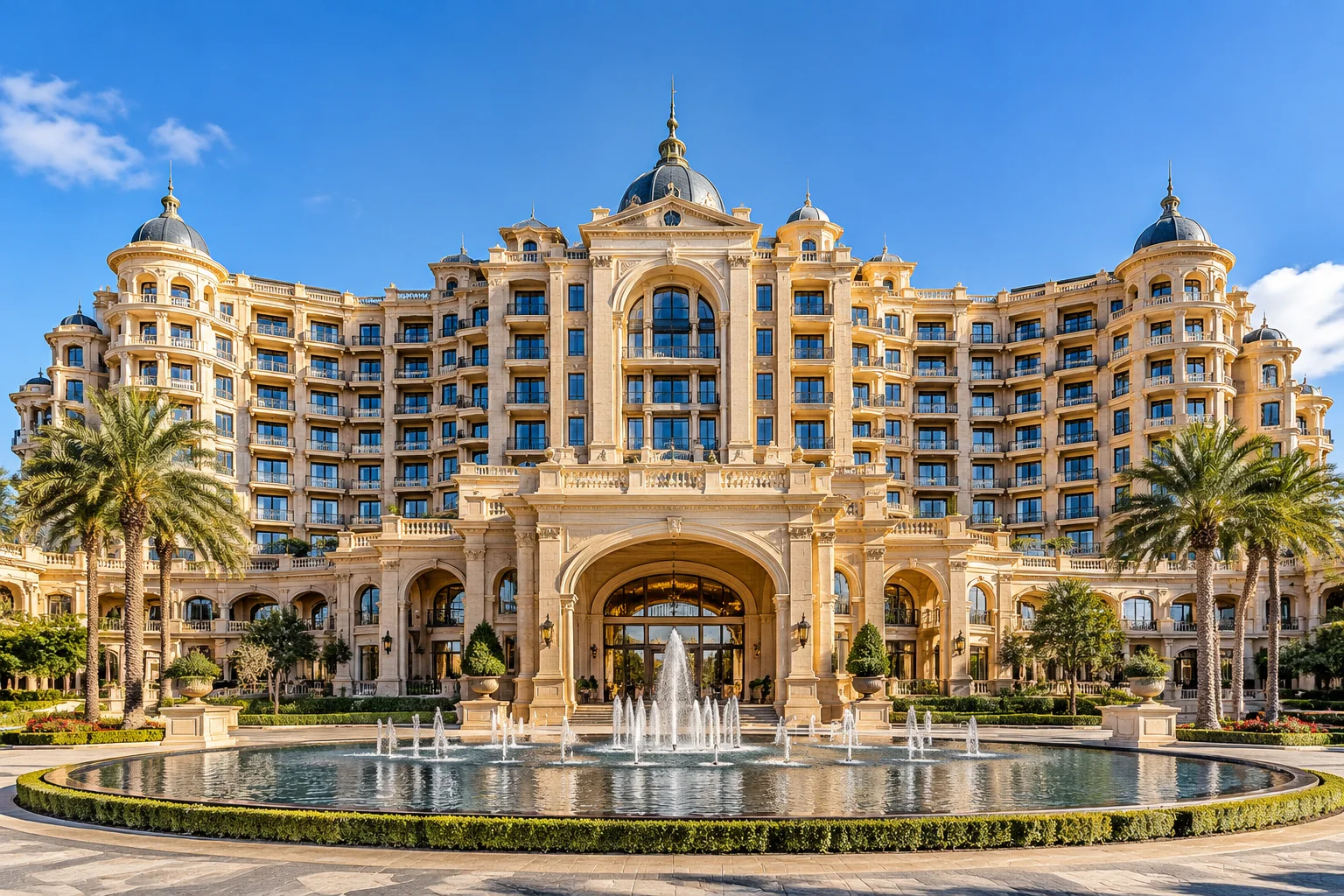
The evolution of destination resorts mirrors the ambitious trajectory of modern structural engineering. When hospitality developers realized that standard box-shaped hotels could no longer spark travelers' imaginations, visionary architects took center stage to redefine public spaces.
Early gaming retreats focused primarily on interior comfort, yet the late twentieth century challenged that modest premise. Master builders began experimenting with monumental cantilevers, free-span domed ceilings, and sweeping glass curtains. These dynamic buildings quickly established their own architectural category, where structural precision met uninhibited theatrical spectacle.
A Structural Paradigm Shift
Engineering massive public floors without intrusive load-bearing columns required specialized steel space frames and reinforced concrete shells that had never before been deployed at such an enormous commercial scale.
01.The Era of Soaring Atriums and Post-Tensioned Slabs
In the late 1960s and 1970s, resort designers faced a major challenge: guest towers were expanding rapidly, but the sprawling ground-level amenities required open sightlines. Architects pioneered tiered atrium concepts that let natural light cascade hundreds of feet down into indoor botanical conservatories and dining plazas.
Column-Free Spans
Engineers utilized heavy post-tensioned horizontal beams to sustain multi-story guest wings over columnless ground halls measuring upwards of 100,000 square feet.
Thermal Glass Innovations
Reflective double-glazed curtain walls permitted breathtaking panoramic viewpoints while shielding lavish interiors from harsh desert sun and coastal salt winds.
02.Transforming Skylines into Narrative Expressions
During the megaresort boom, exterior silhouettes became living brand signatures. Geometric pyramids, golden reflective monoliths, and neo-classical colonnades replaced modest mid-century low-rises. Every facade told a story visible from miles away, using advanced exterior illumination and intricate precast elements.
The engineering involved was as challenging as the aesthetic concept. Wind-tunnel testing informed tower geometry, while deep caisson foundations stabilized multi-thousand-room superstructures over complex soils. What looked like decorative extravagance was fundamentally rooted in rigorous civil and seismic engineering.
Pivotal Architectural Breakthroughs
| Engineering Innovation | Historical Impact on Modern Resorts |
|---|---|
| Post-Tensioned Concrete | Allowed soaring ceiling clearances and expansive casino floors without mid-room support columns. |
| Curtain-Wall Low-E Glass | Transformed building exteriors into radiant golden and bronze beacons while lowering solar heat gain. |
| Geodesic and Space Frame Roofs | Facilitated massive indoor biosphere conservatories, water features, and climate-controlled gardens. |
| Integrated Themed Facades | Bridged classical masonry detailing with high-speed elevator banks and automated energy management. |
03.Contemporary Sustainable Towers and Future Horizons
Modern luxury resort complexes now incorporate aerodynamic curvilinear profiles, dynamic kinetic facades, and comprehensive smart microclimates. Sustainable materials and energy-efficient water recirculation systems ensure that monumentality no longer comes at the expense of environmental responsibility.
Architectural Legacy Insights
- Resort architecture fundamentally unlocked giant indoor civic volumes that set new benchmarks for civil engineers worldwide.
- The combination of reflective curtain walls and themed geometry turned regional skylines into universally recognizable landmarks.
- Contemporary properties harmonize record-breaking structural scales with LEED certification and intelligent climate management.
Experience These Living Monuments
Discover world-renowned casino resorts and reserve your stay inside these celebrated masterworks of design.
Questions or corrections?
For information about this guide, email [email protected]. Reservations and booking support are handled by the external provider.
Contact the editorial team